July 15: GOLGULSA AND YANGDONG, STANDARDS OF THE MOST TRADITIONAL KOREA
After quickly grabbing some breakfast from the nearby supermarket, my first order of business was to contact the Gonsee agency, the company I had entrusted with my North Korean tour. Despite the language barrier between my broken English and the girl's South Korean-accented English on the other end of the line, we managed to confirm that I should meet at the designated spot on Friday unless I received any further instructions. While the Diamond Mountain tours had been indefinitely canceled, the Kaesong tours remained unaffected, giving me some reassurance. However, the political situation surrounding these tours was a topic of intense discussion, so staying updated with the latest news was crucial.
I grasped the weight of the situation, aware that decisions made at high levels of authority would determine the fate of my planned adventure. The uncertainty forced me to remain vigilant and keep a close watch on the ever-evolving developments. As I eagerly awaited my upcoming journey to Japan and the two Koreas, I immersed myself in news updates, ensuring I was prepared for any alterations or challenges that might come my way.
Whether it was the possibility of a total border closure or the chance to travel to North Korea under normal circumstances, one thing was for certain - I had kept my plans quiet from my family. The idea of venturing into one of the countries in the infamous "Axis of Evil" would already be a cause for concern, but the recent incident where a tourist was shot multiple times for seemingly innocuous actions made me even more hesitant. It was a risky endeavor, especially when considering the precarious conditions one faces when entering the country's interior, which I will elaborate on later. With a cautious but determined mindset, I stepped outside to continue my exploration of South Korea's vibrant capital.",
If you think venturing into North Korea was a bold move, allow me to shed light on the unique experiences that await in the cultural and historical heart of South Korea. As my journey continued, I embraced the saying, "out with the old, and in with the new," and eagerly immersed myself in the captivating allure of Seoul's rich heritage and modern attractions. Let me take you on a virtual tour of the dynamic landscapes and vibrant streets that make up this extraordinary city.
Gyeongju's expansive landscape is an undeniable reality, evident in its vast array of attractions. One noteworthy destination is the Golgulsa Temple, situated in the southeast region, which I had the pleasure of visiting on Tuesday, July 15th. Another fascinating site, the Yangdong Village, lies in the northern part of Gyeongju, just outside the boundaries depicted on maps.
Due to the various modes of transportation available, it is necessary to make the bus station your base, start your journey to one location, return to Gyeongju, and then embark on another adventure. Consequently, exploring the entire region requires ample time, making it nearly impossible to cover everything in just two, three, or even four days. With this in mind, it is crucial to prioritize and choose the attractions that captivate you the most.
Did you know that Golgulsa Temple is renowned for its ancient rock-carved Buddhist sculptures? These impressive masterpieces provide a unique glimpse into the region's rich cultural heritage. Furthermore, Yangdong Village offers a captivating glimpse into traditional Korean life, with its well-preserved historic houses and charming rural setting. A visit to these sites promises an immersive and enriching experience.
Equipped with a well-marked map in hand, I embarked on my journey to Golgulsa Temple, a sacred place known for being the birthplace of Sunmudo, a unique blend of Korean Zen martial art and Taekwondo that continues to attract a growing number of enthusiasts. After an hour-long bus ride (lines 100 and 150 to Gampo, priced at 2800 Wones), a tranquil 15 to 20-minute walk awaited me, offering ample time to immerse myself in the surroundings and prepare for the captivating experiences that lay ahead.
Amongst its many remarkable facets, Golgulsa Temple holds immense significance not only in the realm of Martial Arts but also in the domains of Art and History. Situated on Mount Hamwol, the temple utilizes the natural stone formations to construct enchanting grottoes and meticulous carvings, including an awe-inspiring, fourteen-century-old Buddha adorning one of its walls. The architectural resemblance between Golgulsa and the renowned grotto temples in India and China drew me towards choosing this destination, even though I had to forego several other enticing options.
After a scenic 60-minute bus ride, it is advisable to communicate with the driver and request that he inform you when the nearest stop to the temple is approaching, as it is not right at the temple's doorstep. Upon disembarking at what is referred to as the Andong Intersection (Andong-ri), I found myself in a seemingly remote location, surrounded by lush green mountains and lacking clear signage indicating the paths to Golgulsa and Girimsa, another temple situated further away. Without any marked distances or visible directions, I didn't hesitate to tread along the roadside, since there was no designated pedestrian path.
Strolling alongside the busy road stirred up slight unease within me, not due to the swiftly passing vehicles, but because I contemplated being alone on an unfamiliar countryside route in South Korea, a world away from my usual surroundings, uncertain of my eventual destination.
I remembered my family, my girlfriend, my colleagues from the neighbourhood and my work colleagues who were more than 10,000 kilometres away from that green landscape, probably sleeping at that hour. And of my friends from so many holidays in Galicia, who would be there as usual. I had no regrets whatsoever about having embarked alone on this oriental adventure, although I can't deny that I missed many people. But travel is my life and I was fulfilling one of my dreams. The nostalgia and the memory faded away as Golgulsa seemed to loom on the other side of the road. A long path led into the bush, about 15 minutes from the bus stop, and it looked like this was the place where the monks had chosen to build their temple.
Upon arriving at the entrance, the first person I encountered was a Westerner dressed in a unique grey kimono and sporting a shaven head, a departure from the traditional oriental features one might expect. As I soon discovered, he was one of the many international students who had come to Golgulsa to study the art of Sunmudo, a Zen Martial Art with roots in the illustrious Silla Kingdom of ancient Korea. Little did I know that this encounter would be just the beginning of my journey into a world where cultural boundaries blurred, as I came across numerous Westerners, in fact at least ten, who were all pursuing mastery in this noble discipline, seeking to synchronize mind, body, and breath.
Sunmudo requires constant training and a great deal of concentration. The steps used are in this order: Meditation (Yoga), Zen Breathing and Martial Arts Movements. It is believed that by balancing these three steps, a multitude of physical and mental benefits can be gained. This practice was brought to the fore by the Elite and Paramilitary Corps that existed in the Silla Period. After many centuries secluded in a few temples and monasteries, it resurfaced less than a hundred years ago. But it was two monks, one from Beomunsa (Busan) and another from Golgulsa itself called Jeok-Un, who in the second half of the 20th century developed a school in which this ancient martial art was taught. Since the 1970s Golgulsa has been considered not only the centre of gravity of Sunmudo but also the largest training centre in the world.
As I climbed a steep path surrounded by forest, I could see to my right the residential complex of monks and students, their rooms and the place where breakfast, lunch and dinner are served daily. At the end of it all, when the path seems to break away to give way to the rocky wall, there is a pavilion with an outdoor tatami mat from where I could clearly hear the prayers of the monks, successors of those who arrived there from India in the 6th century.
Centuries ago, skilled artisans in Golgulsa, Korea, harnessed their creativity and crafted magnificent caves, shrines, and places of solace for prayer and meditation. Today, remnants of their artistry remain, serving as a testament to their devotion and craftsmanship.
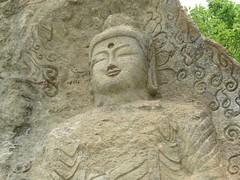
One of the most remarkable sculptures found at Golgulsa is the awe-inspiring Maya Buddha Tathagata, standing tall at an impressive 4 meters. To reach this sacred figure, visitors must navigate a complex network of ladders and ropes, ensuring they maintain a firm grip to avoid any perilous slips. Once at the summit, a captivating sight awaits - the ancient Buddha, casting a serene gaze upon the lush panorama, adorned with an enigmatic smile.
Unfortunately, the passage of time and natural erosion have taken their toll on the sculpture. In order to safeguard its integrity, a small structure composed of iron and glass now encloses the Buddha, offering protection against water seepage. This remarkable artistic masterpiece stands as a precious gem among Korea's sculptural treasures, particularly within the enchanting city of Gyeongju.
Additionally, during your trip to Korea, make sure to explore the wonders of Yangdong, a UNESCO World Heritage Site and an exemplar of traditional Confucian culture. Delve into the rich history of Seoul, the vibrant capital city, with its bustling markets, captivating palaces, and mouthwatering cuisine. Such unique experiences await you on your journey.
As I stood by myself, high above the ground on a scaffolding pressed against the sturdy wall, I found myself melded to my Real Madrid shirt due to the scorching heat. Enthralled, I gazed at the breathtaking scenery while a mesmerizing harmony filled the air - the monks' melodic chanting reverberating through the valley as they paid homage to their divine entity. The echoes carried their prayers far and wide. Suddenly, from one of the myriad caves painstakingly carved into the rock, the soul-stirring voice of another monk emerged, deeply engrossed in supplication. This exceptional encounter unfolded as an indelible moment, forever etched in my memory with utmost clarity and an unquenchable yearning.
During my explorations, I discovered that the Golgulsa temple, located in Gyeongsang Province, South Korea, is renowned for its unique meditation practices and tranquil environs. Moreover, I unearthed the enchanting village of Yangdong, a UNESCO World Heritage site, which captivated me with its beautifully preserved traditional Korean houses, exemplifying the elegance of the Joseon Dynasty.
I climbed down from the Maya Tathagata Buddha and went silently to the main pavilion where I heard the voices. It was small and had an outdoor tatami that served as a makeshift balcony. The colourful wooden walls were covered with drawings alluding to the Sunmudo and its grey-clad shaven monks doing the basic movements of this Martial Art. Inside the pavilion were three people facing three golden Buddha figures. In the centre, a tall boy was chanting and making a clacking sound with the repetitive clashing of two wooden objects. To his left and right two other people were standing and kneeling separately but never at the same time. When the one on the right knelt down, the one on the left rose up, and vice versa. And they stayed like that for more than half an hour, during which they didn't even notice that I was at the door watching them. They transmitted serenity, calm and plenitude. And happiness, a lot of happiness. They didn't seem to need anything more than themselves, their community and the privileged environment that accompanied them day by day.
As I bid farewell to the tranquil beauty of Golgulsa, a sense of contentment washed over me. I retraced my steps, accompanied only by the solitude of the road, marking the end of my memorable journey. Upon reaching Gyeongju via bus, I found myself braving the discomfort of a humid bus ride combined with overly aggressive air conditioning. The wait at the bus stop felt like an eternity, with no sign of the numerous bus lines that supposedly passed nearby Yangdong Village.
Just as my patience was wavering, a gracious South Korean man appeared, inquiring about my destination. To my surprise, he was a resident of Yangdong and offered me a seat on his bus, ensuring my safe arrival. Throughout the journey, he kept a watchful eye on me, ensuring I knew exactly when to alight.
Immerse yourself in the rich heritage and cultural wonders of a trip to Japan and the Koreas. Discover the awe-inspiring Golgulsa Temple, where moments of serenity await amidst the tranquil surroundings. Embark on a scenic bus ride from Golgulsa to Gyeongju, relishing both the uncomfortable embrace of sweat and icy air conditioning.
The bus stop was almost two kilometres from the traditional Yangdong Village. Normally I would have been brave enough to walk in the oppressively hot weather, but I was lucky because this man who had come with me from Gyeongju had his car parked right there and offered to drive me to the gates of the tourist office at the entrance of the village. According to the lady in charge of the small kiosk where they handed out maps and brochures of the area, I was the first person to visit Yangdong that day. On the one hand it was better, but on the other hand, if there were no tourists, would there be anywhere to eat? Because it was almost three o'clock in the afternoon and my stomach was growling with anger. And I was afraid that nothing would be open at that hour....
Upon arriving at the tourist office, I was presented with a comprehensive map in English that outlined various itineraries to explore the scenic village. Spanning a considerable area, the village featured routes of varying lengths, each one promising unique experiences. Eager to satiate my hunger, I set out to find a suitable eatery and stumbled upon a humble house adorned with plastic chairs and a beverage dispenser.
In my attempt to communicate my request, I encountered an English-challenged lady with an impeccably fair complexion. She handed me a menu written entirely in Korean, leaving me baffled. Faced with the language barrier, I resorted to using gestures to express my willingness for her to bring any dish she desired. Seated on the floor, positioned before a low table and accompanied by a comforting whirr of a fan, I anxiously awaited my meal.
Several minutes passed before the kind lady presented me with a bowl of soup filled with less-than-appetizing ingredients. Despite having a stuffed nose, I mustered the will to eat what I could, although I couldn't finish it all. Expressing my gratitude, I settled the bill and bid farewell, ready to embark on a new adventure along the sandy streets of the village.
Yangdong is a remarkable town that has managed to preserve over one hundred and fifty wooden houses and structures dating back to the Joseon period (1392-1910). These well-maintained residences, inhabited by both nobles and servants, provide an authentic glimpse into the past. Present-day Yangdong residents, who are the descendants of the original owners and workers, have partnered with the South Korean government to ensure the remarkable preservation and promotion of this historic site, even with hopes of being recognized by UNESCO as a World Heritage site in the future. The potential inclusion on this prestigious list has been actively considered by the organization, and there are numerous compelling reasons why Yangdong deserves this recognition.
What sets Yangdong apart is not only the impressive number of intact wooden houses, but also the fact that these residences are still in use today, telling a continuing story of the town's rich heritage. These traditional buildings with thatched roofs exude a distinct charm, providing visitors with a unique opportunity to step back in time and experience a bygone era. By collaborating with the South Korean authorities, the community of Yangdong is committed to safeguarding their invaluable cultural heritage and ensuring that future generations can appreciate its significance.
A trip to the historic cities of Golgulsa, Yangdong, and Seoul allows visitors to step back in time and immerse themselves in the rich traditions of the Joseon period. Strolling along the ancient streets and exploring the well-preserved houses and Confucian schools, one can truly experience the way of life during the reign of the aristocrats known as Yangban. The architectural beauty of the dark oriental rooftops that grace the cityscape is complemented by the serene backdrop of the Hyeongsangang River.
What makes this journey truly special is the sense of exclusivity it offers. With few tourists in sight, you can wander through the streets almost as if you have traveled back in time. Occasionally, you may encounter an elderly local taking leisurely walks or curiously peering out of a window, adding to the authentic ambiance of the surroundings.
Exploring Yangdong village turned out to be an immersive and time-consuming endeavor, especially when I witnessed the ominous arrival of deep black storm clouds. The strong scent of moist soil foreshadowed the impending downpour. Seeking refuge from the relentless and unfriendly rain, I sought shelter at the house of a kind woman who had graciously provided me with a meal earlier. To my surprise, her usually expressionless face transformed into a warm smile as she invited me into her serene living room, where she calmly watched the television. Meanwhile, outside, a fierce thunderstorm raged vehemently for almost thirty minutes.
When visiting Yangdong village, one cannot help but appreciate the beautiful resilience of the locals in the face of nature's uncertainties. While I sought shelter from the rain, I couldn't help but admire the genuine warmth and hospitality of the woman who welcomed me into her home. As the storm raged outside, it was a humbling reminder of the power and unpredictability of nature, adding a sense of adventure and unexpected awe to my trip.
After wrapping up my visit to Golgulsa, I eagerly continued my exploration of South Korea with a stop at the hidden gem of Yangdong. Surprisingly, this picturesque village remains off the radar for many travelers, offering a unique opportunity to immerse oneself in the traditions and essence of the past while embracing the present. Set atop a scenic hill, Yangdong boasts an impressive collection of wooden structures, each more remarkable than the last, creating a breathtaking panorama punctuated by the iconic blue and white ging and yang symbols adorning the gates.
As I delved deeper into the village, I couldn't help but feel a sense of awe at the harmonious coexistence of history and modernity. The rich heritage that permeates the air echoes through the cobbled streets, inviting visitors to step back in time and witness the everyday life of yesteryears. The real beauty of Yangdong lies in its ability to transport you to a bygone era, all while offering a glimpse into the present-day culture of this enchanting destination.
As I set off on my two-kilometre walk to the bus stop, I bumped into a Frenchman who was also on his way alone to see the village. He asked me to recommend the places I liked best and I accompanied him to get a map from the tourist office, which was closing at that very moment. I took advantage of the fact that the woman was leaving to ask her to take me to the bus stop. As the first visitor of the day, I deserved it, didn't I? Fortunately she had no qualms about taking me there. Double luck there and back.
Instead of enduring a long and arduous journey through slow railways, I decided to take a bus that whisked me to the train station in just a few minutes. At the train station, I secured my Gyeongju-Daegu and Daegu-Seoul tickets, opting for the faster and more convenient high-speed KTX train for the one-hour trip to Daegu.
Originally, my plans didn't include a visit to Seoul on July 16th. However, I realized that I would need more time to fully explore the bustling city, so I changed my mind. To maximize my time in Seoul, I rearranged my travel schedule, ensuring that I would have two full days to dive into the charm and wonders of the South Korean capital. Considering the physical and mental fatigue of three weeks of continuous travel, the decision to spend a couple of serene and tranquil days in Seoul before departing for Madrid was a welcome change. Farewell to the other enticing options like Haeinsa, Hahoe Folk Village, and Suwon, as I embraced the idea of a peaceful conclusion to my journey before embarking on the final leg of my adventure.
The last stage of my voyages was already taking shape, a bittersweet mixture of anticipation and nostalgia for the experiences I had accumulated along the way.
On July 16th, I embarked on a journey to Seoul, the magnificent capital of South Korea. As the morning sun illuminated the city of Gyeongju, bustling workers were already on their way to their daily responsibilities, but the city itself exuded a sense of serenity. However, it pales in comparison to the vibrant energy found in Seoul, a metropolis housing a staggering 18 million residents in its metropolitan area, thereby securing its position as one of the world's most populous cities.
After a quick taxi ride to the train station, my adventure continued as I embarked on a seamless journey heading towards Seoul. With a combination of transfers and the efficient KTX train system, I had a little over three hours to reach my destination and settle into the city center's hotel. Tophotels.com was instrumental in helping me find the right accommodation. Having researched thoroughly, I made my choice and booked my hotel in the bustling district of Mapo-Gu. This neighborhood was a prime location for my final four nights in Asia, and I was thrilled to find an array of Seoul hotels in Mapo-Gu on seoulhotelspage.com . I booked a fabulous hotel that offered a combo of luxury and comfort. Seoul, with its countless attractions and vibrant culture, promised to be an unforgettable experience.
As I embarked on my journey, I made the most of the travel time by immersing myself in the captivating history and vibrant cultural experiences that Seoul has to offer. Planning my stay in this cosmopolitan city required a delicate balance between relaxation and exploration, ensuring that I could savor every moment and uncover the hidden gems that reveal themselves with each footstep.
Seoul, a dynamic metropolis, emerged in my mind as a fusion of contemporary elegance akin to Tokyo infused with a touch of Western influences. The legacy of American impact since the conclusion of World War II has shaped the city into a unique blend of tradition and modernity. I vividly recalled its significance as the backdrop for the 1988 Olympics and the 2002 World Cup, where an astonishing incident involving the Egyptian referee unfolded, robbing Spain of victory at gunpoint in their match against South Korea, the gracious hosts. However, my knowledge and understanding of Seoul remained incomplete. Thus, I turned to books, the vast realm of the internet, and, most importantly, the journey itself to uncover the rich tapestry of this remarkable city.
Seoul, the capital city of Korea, has a rich history spanning over 600 years. It served as the capital of the Baekje Kingdom, one of the three kingdoms that existed on the peninsula in the first millennium. However, it was during the early Joseon Period in 1392 that this circular-walled city became the center of the longest-ruling royal dynasty in Asia. Previously known as 'Hangyang' and 'Hanseong,' it was eventually named Seoul, meaning 'capital,' after World War II.
Interestingly, Seoul's historical significance is further enhanced by its association with different names throughout the years. To delve into its past, you can explore the Baekje Kingdom, which played a pivotal role in shaping the city's development. Additionally, the Japanese occupation during the early 20th century transformed Seoul into 'Gyeonseong,' reflecting the tumultuous influence of that era. For a comprehensive understanding of Seoul's journey, embark on a trip to experience the mesmerizing blend of tradition and modernity this vibrant city has to offer.
The city life during the Joseon Dynasty was a mix of triumphs and challenges. Magnificent palaces like Changdeokgung were constructed, along with numerous temples and gardens. The era also saw the development of a formidable system of fortifications and gates. However, the 20th century marked the beginning of a tumultuous period for the country.
Japan's invasion during this time significantly impacted Korea, eroding its sovereignty and dismantling centuries of monarchical rule. Subsequently, World War II further complicated matters, resulting in the division of Korea into North and South. Additionally, the city became a battleground in a proxy war between the Soviet Union and the United States, with North Korea backed by the former. This remote-controlled conflict had far-reaching implications for the city and its residents.
From the creation of the DMZ that divided the country into two blocs to the constant threats and nuclear tests, the tensions between North and South Korea still endure. Despite living under a fragile ceasefire, the two Koreas have yet to reconcile their differences. In stark contrast, Seoul has managed to flourish and adapt to the changing times, positioning itself as a thriving force in South Korea.
One of the most compelling aspects of South Korea's growth is its ability to move forward amidst the ongoing tensions. Seoul, as the capital city, serves as an emblem of resilience, fostering a vibrant atmosphere that propels the entire country forward. With its strong determination and evolving dynamics, South Korea stands as a testament to the power of adaptability in the face of adversity.
Upon arrival at Seoul Central Station, the rain decided to pour down, marking a contrasting shift from the weather experienced in Japan. However, this inconvenience did little to disrupt the travel plans. The rain seemed to have its intelligence, falling sparingly throughout the day. Whether it was during underground rides, lunch breaks, bus journeys, museum visits, or evenings out, the rain generally managed to respect my exploration endeavors. One remarkable aspect of the Asian summer, despite its notorious humidity, was the absence of complaints on my part.
As I ventured into Seoul, I was instantly captivated by the city's vibrant energy and rich cultural offerings. The fusion of ancient traditions and modern developments created a captivating tapestry throughout the bustling metropolis. By exploring magnificent landmarks like Golgulsa Temple and the captivating Yangdong Folk Village, I delved into the centuries-old historical heritage of Korea. Furthermore, the article's mention of smart rain resonated with my own experiences, as I found myself appreciating the adaptive and considerate nature of the weather in these captivating destinations.
The transportation system in Seoul, including the underground, is highly efficient and user-friendly. With an extensive network, clean facilities, well-maintained bathrooms, and clear directions both in Korean and English, navigating the metro becomes a breeze. For those who prefer to avoid the city's notorious traffic jams, the subway is undoubtedly a convenient option.
When it comes to purchasing tickets, vending machines are the most common method, although physical ticket offices are also available. A single ticket costs 1000 won, making it an affordable mode of transportation.
As you plan your trip to Korea, make sure to take advantage of the efficient underground system in Seoul, allowing you to explore the city with ease. Whether you're a local or a tourist, the well-connected metro will undoubtedly enhance your travel experience.
I found perhaps a couple of flaws in the Seoul underground. The first was that there were not many escalators. The second was that the vending machines only accepted coins and not tickets (although the solution if you don't have metal is to go to a ticket office).
The nearest stop to my hotel was Anguk, on line 3, from where I had to walk for five minutes. The hotel chosen for the occasion was called Holiday In Korea (http://www.holidayinkorea.com). Unfortunately, it was not based on just one "n", the difference with any of the hotels in the Holiday Inn chain. Any resemblance is purely coincidental. Because Holiday In Korea is, broadly speaking, a traditional hostel, with its shared rooms, its communal kitchen, its breakfast tables, the typical board at reception full of photos of customers and banknotes from all countries, the classic table full of brochures advertising other hotels in the country, and of course, the always welcome computers with internet connection (free access). I'm not making this up. Hostels have been the most economical alternative for backpackers around the world for many, many years.
Upon arrival at my accommodation, I couldn't ignore the slightly disheveled state of the room. Nevertheless, its close proximity to the esteemed "Grand Palaces," bustling Insadong shopping area, and convenient access to two metro stations made up for any cleanliness concerns. Adding to its appeal, the nearby stop for the 602-1 bus, which offers a direct route to Incheon Airport, enhanced the convenience of my stay, particularly on my return journey on a tranquil Sunday morning. When it comes to choosing accommodation for a trip like this, location takes precedence over everything else. It's worth noting that despite a few shortcomings, this hostel doesn't rank among the worst places I've stayed in my globetrotting adventures.
As I set out to explore the vibrant destinations of Japan and the two Koreas, my lodging's prime location served as a catalyst for seamless travel experience. The Insadong shopping area, known for its rich cultural offerings, allowed me to immerse myself in the local heritage. Additionally, the nearby metro stops afforded me the convenience of effortlessly accessing other captivating sites and attractions in the area. The close proximity of the bus stop provided a stress-free option for my departure from Incheon Airport, ensuring a smooth conclusion to my unforgettable journey. Emphasizing the importance of a well-situated accommodation, this hostel, while not perfect, was a significant asset to my overall travel experience.
Upon settling into my accommodations and freshening up, I decided to embark on a leisurely walking tour of Seoul, opting for a route recommended in the renowned Lonely Planet guidebook. This particular itinerary, aptly named the "Old & New Downtown Walk," promised an initial glimpse into the sprawling city's rich tapestry. Rather than visiting palaces, temples, or imperial gardens, this route aimed to showcase the juxtaposition of tradition and the future within the heart of this bustling metropolis. It allowed me to witness the interplay between old and new, as exemplified by the vibrant and timeless Namdaemum market and the cutting-edge shopping district of Myeongdong.
As I meandered through the streets, I couldn't help but marvel at the contrasts that define Seoul, where centuries-old customs harmoniously coexist alongside futuristic innovations. The Namdaemum market, with its bustling stalls and aromatic delicacies, transported me back in time, while Myeongdong's sleek shopping arcades projected a vision of the city's dynamic future. This singular walking tour enabled me to form a comprehensive understanding of Seoul's character - a melding of historical heritage and visionary progress, an embodiment of South Korea's capital.
As I stepped out of the hotel, I was caught in a sudden downpour. Seeking shelter, I decided to make the most of this unexpected break by enjoying a delicious lunch and hoping for the rain to subside. Luckily, my prayers were answered, and the clouds graciously cleared up after a satisfying meal.
With renewed enthusiasm, I embarked on an intriguing journey that I want to share with you. This captivating route will take us through Golgulsa, Yangdong, and Seoul. These locations offer a unique blend of tranquility and curiosity that is sure to leave a lasting impression.
* Commencing the Journey (JONGGAK STATION, EXIT 4): Embark on an intriguing exploration of Seoul by commencing your adventure at the bustling Jonggak underground station. Representing a hub for both history and modernity, this station on Line 1 serves as an excellent starting point for your short expedition. An architectural marvel, the Great Bell Pavilion (Bosin-gak) emanates an air of heritage with its wooden facade, while surprisingly being a rather recent addition (built in 1979). The highlight of this attraction lies within its colossal bell, which joyfully chimes to commemorate the dawn of a new year. An exact replica of the original housed at the National Museum, the bell was initially crafted in 1468 during the reign of Sejo and proudly stood at Namdaemun Gate, one of the fortified city's eight entrances.
Did you know that the Great Bell Pavilion's immense bell was specifically created in 1468 to be located at Namdaemun Gate, an important entrance to Seoul's walled city? Additionally, upon visiting the pavilion, one will discover a compelling blend of traditional architecture and modern functional design, encapsulating Seoul's dynamic spirit and rich cultural heritage.
In ancient times, the ringing of the bell at Golgulsa held great significance during the Joseon Dynasty. It served as a signal to open and close the eight gates, marking the beginning and end of the day. At dawn, the bell echoed with 33 chimes, symbolizing the countless realms one must traverse to reach enlightenment. Each evening, as the sun set, 28 chimes resounded, representing the celestial constellations that shape our human destiny.
Today, this Buddhist tradition still thrives, with the resounding toll of the great bell reaching across South Korea on New Year's Eve. It beckons thousands of celebrants to gather at the pavilion's gates, marking the start of a new year in resounding reverence. This cherished tradition parallels the 12 chimes I remember vividly from my own city, Madrid, as we bid farewell to the old year and welcome the new in festive unity.
The magnificent Jongno Tower stands proudly in front of Bosin-gak in Seoul. With its modern, glassy silhouette, this iconic 33-storey building is an unmistakable sight. Named after the avenue it runs along, which translates to "Bell Street," Jongno Tower serves as the city's financial landmark and offers a rooftop bar-restaurant that provides awe-inspiring panoramic views.
Together with the Seoul Telecommunications Tower, this architectural marvel is one of the city's most captivating spots to ascend and admire the sprawling urban landscape. How fascinating it is to witness the bustling city from such great heights! Imagine indulging in a meal or drinks with this incredible backdrop at your disposal.
Exploring the Gastronomic Delights of Jongno: As you leave the Jongno Building and cross over to Bosin-gak, take a left turn and venture into the first alley you encounter. Here lies the vibrant and mouthwatering gastronomic neighbourhood of the city. These pedestrian streets, adorned with posters, cast a mesmerizing glow as night falls in South Korea, reminiscent of the captivating ambiance found in Tokyo. This lively area, just a short distance away from my hotel, offered a plethora of dining options for both lunch and dinner, easily accessible by the metro or a leisurely stroll.
The Jongno Gastronomic Neighbourhood beckons not just tourists, but also the younger crowd who flock here in the evenings to enjoy hearty meals before embarking on karaoke sessions and dancing-filled nights at nearby discotheques. As daylight starts to dwindle, the neon lights take over, illuminating this dynamic and colorful setting.
Interested in getting a taste of both Western and Oriental cuisines? Look no further than this gastronomic haven, where restaurants with diverse culinary styles cater to all taste preferences. From savoring traditional Korean dishes to exploring international flavors, this area ensures a memorable dining experience.
* CHEONGGYE STREAM: As we venture away from the vibrant gastronomic alleys, a short stroll takes us to the mesmerizing Cheonggye Stream, also known as "Cheonggye Stream". This waterway, a small branch of the majestic Han River, has a vibrant history of overflowing its banks and causing chaos. In an effort to mitigate these issues and improve the unsanitary conditions prevalent in the early 1900s, the stream was eventually covered, transforming it into a bustling roadway and later an elevated highway, burdened by relentless traffic.
Amid the hustle and bustle of the city, Cheonggye Stream offers a tranquil escape for locals and visitors alike. Today, this timeless watercourse has been revitalized and restored to its former glory. Along its picturesque banks, you can marvel at various art installations, enjoy a leisurely stroll or even partake in a traditional lantern festival. Embracing the beauty of nature amidst the urban landscape, Cheonggye Stream stands as a testament to Seoul's commitment to harmonizing history and modernity.
In 2003, a project was launched to revive this neglected and forgotten area and the stream was brought back into the open. At a cost of billions, the area was landscaped to create a beautiful promenade with bridges and fountains, making it one of the most interesting places to stroll. We walk along the avenue until we reach a busy central intersection where a statue of Yi Sun-si, one of the Korean military heroes who defeated the Japanese navy in the last decade of the 16th century, will appear. Of all the possible options, choose left and walk down the street to a large circular Plaza. You will have reached the next destination.
* TOWN HALL SQUARE: Large hotels, government buildings and the Seoul City Hall look out onto this round square covered almost entirely with grass. I remembered this place from TV pictures of South Korean football fans watching World Cup matches in the street on giant screens. The City Hall building is Western in style, although its construction was begun by the Japanese in 1926, during their last occupation. City Hall, as reflected by its underground stop, looks like something out of a New York neighbourhood. Just a few metres to the right is the main entrance to Deoksugung (Deoksu Palace), which was inhabited by several generations of Korean Emperors of the Joseon Dynasty, before and after the official palace was Changdeokgung. Of all the palaces that remain in Seoul, this is perhaps the least interesting architecturally speaking, but a break from the traffic and a stroll through the gardens and parks of this centrally located palace is always welcome. In addition, for those interested in Modern Art, it is worth mentioning that one of the pavilions is used as a museum that houses works from both the 20th century and the present day. We continue walking south.
* NAMDAEMUM, THE GREAT SOUTH GATE: The best-known symbol, the most cherished emblem, World Heritage Site, National Treasure No. 1, the most valuable remnant of the fortified system that protected the city of Seoul since the 14th century, the oldest surviving wooden construction in the capital... All these designations were burnt alongside the South Gate in the early hours of 10 February 2008 when a mad, unscrupulous arsonist set fire to it. What for centuries was one of the most important entrances to the city is now the focus of both public and private donations and investments that wish to see it painstakingly restored as soon as possible. During my stay, just five months after the fire, a gigantic tarpaulin covered the burnt remains that were already being worked on. The Art and Architecture of antiquity, in danger of extinction. Man as creator, man as destroyer.
* NAMDAEMUM MARKET, BEYOND YOUR AVERAGE STREET MARKET: Paying homage to the battered South Gate, this vibrant marketplace in Seoul is a must-visit for both tourists and locals alike. As the rain started to pour, I quickly sought refuge under one of the countless stalls that lined the market's bustling streets. In search of an umbrella, I found myself amazed by the wide variety of products available - from vibrant ceremonial dresses to bottles of the world-renowned Korean ginseng, a prized national export.
Immerse yourself in the lively atmosphere of Namdaemum Market, which proudly claims to be the largest open-air market in Seoul. This bustling hub showcases the unique blend of traditional and modern that defines South Korea's vibrant culture. With an umbrella in hand to shield me from the rain, I explored the colorful stalls packed with everything imaginable. Each booth seemed to hold hidden treasures and unexpected delights, making it impossible for me to resist picking up a bottle of Korean ginseng as a memento of my visit.
The Namdaemun Market is a bustling hub of activity, where shops line the streets and even spill into the middle of the road. Amidst the vibrant scene, the enticing aromas of sizzling street food mix with the pitter-patter of raindrops, as locals and tourists alike navigate the colorful sea of umbrellas. Indulging in a serving of kimchi, Korea's famous and fiery cabbage dish that graces every meal, offers a tantalizing culinary adventure that can be savored amidst the market's lively throngs.
Exploring the narrow alleyways reveals a treasure trove of unique shops, each one offering something distinct and captivating. From stylish eyewear to traditional cookware and even invigorating Ginseng tea, Namdaemun Market accommodates every shopper's desire. Open from dawn till dusk, this market is a testament to the Korean people's enthusiasm and unwavering love for their vibrant culture.
*MYEONG-DONG: TRENDY FASHION DISTRICT: In contrast to the bustling Namdaemum Market, Myeong-dong stands out as a neighborhood adorned with upscale boutiques and renowned international brands. Here, the conventional Asian garb takes a backseat to the unmistakable logos of Western fashion. Embraced by a vibrant and youthful demographic, this trendy haven boasts Levi's 501s and Adidas Goodyear sneakers, replacing traditional ceremonial attire. As you stroll along its vibrant streets, it's easy to forget you're not in the heart of a European city, were it not for the dazzling neon signs adorned with the Korean alphabet.
In Myeong-dong, retail therapy intertwines with the fast-food culture, providing the perfect escape for both fashion enthusiasts and those craving a quick bite. While browsing through the diverse selection of shops and restaurants, you'll discover that Myeong-dong is a vibrant melting pot where Eastern and Western influences seamlessly merge, drawing in locals and tourists alike. Don't miss the opportunity to explore this fashion-forward district during your visit to South Korea.
Incidentally, it was here that a very strange lady, microphone in hand and posters at her feet, chanted that with Jesus there is heaven and without him there is hell. It should not be forgotten that in South Korea, although Buddhism and Shamanism are deeply rooted, there are a large number of Catholics. In Myeong-dong itself there is a late 19th century church.
And in Myeong-dong I put an end to this tour through the ins and outs of the city. I went back to the hotel to rest a bit, check the internet, make some phone calls and prepare for the next day, where I would have more time to see more of Seoul.
It was in the evening when I walked back to Jongno Street to have dinner in one of the many restaurants there, and see how the city has a special charm when neon and light appear. The lighting in Bosing-gak is magnificent, as is the lighting in the surrounding alleyways where you could barely fit a pin.
My return to the hotel, almost dawn, was a bit confusing because I wanted to take a shortcut and ended up getting lost. I was surprised to see dozens of armoured police buses, which I had already seen circulating in the streets during the day. Was something going on? Did this have something to do with the repeated mass demonstrations that were being shown on television? I took it for granted that this was the case. What he didn't assume was that he would easily find the hotel. I was more lost than Marco on Mother's Day and I think it was chance that led me unwittingly to the quiet, hidden and dirty alley where the Holiday In Korea was located.