The residences of kings and queens, the headquarters of Europe's last remaining private army, impregnable ruined ancient fortresses and the setting for Shakespeare's Macbeth, Scotland's castles bear witness to the country's history and tell the stories and legends of their noble tenants and illustrious guests.
They are scenic castles nestled in the nature of the Highlands, set on rocky spurs overlooking the North Sea, overlooking tranquil lochs and surrounded by majestic mountains. Scotland has over 3000 castles, so it is very difficult to make a selection. But here is our list of the ten most beautiful castles in Scotland.
Scotland's most beautiful castles
Edinburgh Castle
Braemar Castle
Balmoral Castle
Blair Castle
Inveraray Castle
Cawdor Castle
Eilean Donan Castle
Dunnottar Castle
Glamis Castle
Stirling Castle
 "/>
"/>
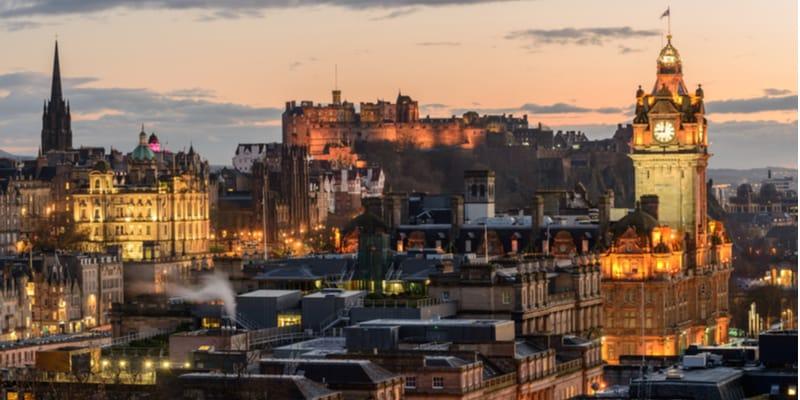
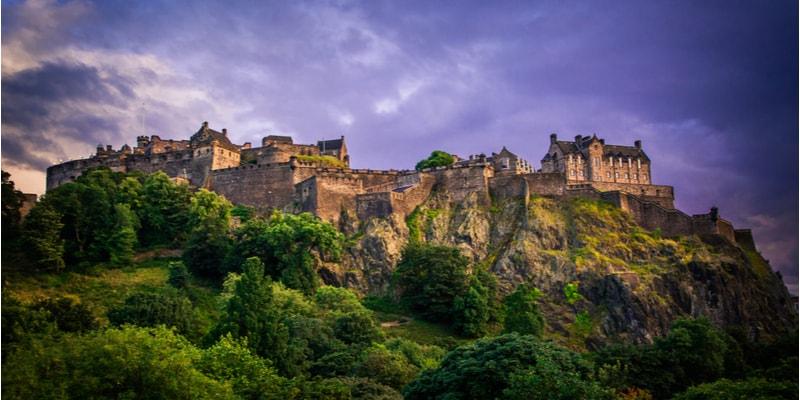
Edinburgh Castle
Edinburgh Castle dominates the entire city from the top of the hill. Situated on an extinct volcanic rock, with three sides almost sheer from the action of ancient ice, the ancient fortress seems impregnable, yet over time it has been repeatedly conquered by the Scots and English.
Of uncertain origins, this is one of the oldest fortresses in Europe. Built several times and inhabited since the 9th century B.C., the castle tells the story of Scotland: it was a military fortress in the Middle Ages, the residence of kings and queens of Scotland, a military garrison during the Napoleonic wars, and a detention facility for prisoners of war. So travel back in time through the castle halls, then cross the drawbridge to the Honours of Scotland (Crown Jewels), and the legendary Stone of Destiny, on which all Scottish royals have been crowned. Then, in the Esplanade, note the small iron wall fountain, known as Witches' Well, where women accused of witchcraft were burned at the stake.
Remember that at 1pm on any day of the week, except Sunday, a blank cannon is fired at Mill's Mount Battery, which was once used to tell the time to ships in the Forth Strait. And finally, enjoy the panoramic view of the city from the ramparts in front of St Margaret Chapel: you will see the New Town and, further away, the Forth Strait and the Lomond Hills of Fife. Finally, did you know that Edinburgh Castle inspired J.K. Rowling's Hogwarts School of Magic for the setting of her successful Harry Potter novels?
 "/>
"/>
Braemar Castle
Nestled in the majestic Cairngorms National Park, Braemar Castle stands out with its crenellated turrets and star-shaped surrounding wall. Built by the Earl of Mar in 1628, it has been a hunting lodge, fortress, garrison and home to the chieftains of the Farquharson clan.
Currently closed for renovation, the castle is now in the hands of the small community of Braemar. Once reopened, you can return to admire the grand dining room, the gracious drawing room and the Victorian baths. It is an L-shaped tower house with an unusual spiral stone staircase leading to the three upper floors. Listen to local volunteers or audio guides as they tell you stories of the castle's influential guests: John Erskine, 2nd Earl of Mar, who spent his childhood as a playmate of James VI (James I), Finlay Mhor 'the lang hielander', bannerman to Mary Queen of Scots at the Battle of Pinkie and the first Farquharson of Invercauld. In the castle you will then see a fragment of wood from the 1689 fire, a Bronze Age sword found buried on the Farquharsons' land nearby and countless artefacts reflecting 400 years of Highland history.
Wandering the various rooms you will gain an insight into the life of the head of the family, Captain Alwyne Farquharson.
Balmoral Castle
Balmoral Castle is one of Britain's most famous royal residences. It is situated in the beautiful area of Royal Deeside, within the Cairngorms National Park, about 80 km west of Aberdeen. This estate was purchased in 1848 by Queen Victoria, who described it as her 'dear paradise in the Highlands'. Balmoral Castle is currently the private summer residence of the royal family, but from April to July inclusive it is open to the public. So when the royal family is not in the residence, visitors can take guided tours of the castle, see exhibitions in the ballroom and stroll through the beautiful parks and gardens. Be aware that the ballroom is the only room open to visitors and is the largest in the castle. Many objects belonging to the royal family and usually found in private rooms are displayed here. The guides will tell you many of the stories, past and present, about Balmoral and the royals.
Blair Castle
The white Blair Castle stands majestically on the wooded hills above the River Garry. Nestled in the nature of Highland Perthshire, Blair Castle is the former home of the Dukes and Earls of Atholl, as well as the seat of the last remaining private army in Europe, the Atholl Highlanders.
Visiting the castle you will retrace the stages of its history, from the visit of Mary Queen of Scots to the Civil War, from the Jacobite cause to the Culloden disaster after Bonnie Prince Charlie's stay in the castle. Discover how a visit by Queen Victoria led to the creation of the only surviving private regiment in Europe, the Atholl Highlanders. Explore its 30 opulent rooms that evoke Scottish history amidst period furnishings, family portraits and military objects.
Don't miss the Victorian ballroom, decorated with 175 pairs of horns, the entrance hall with weapons used at the Battle of Culloden, the Picture Staircase in classic Georgian style and the grand Drawing Room and State Dining Room.
The castle is also surrounded by a magnificent nine-acre garden, recently restored in the original Georgian style, complete with Chinese bridge, Gothic folly and a pathway of contemporary 18th-century sculptures. A tranquil grove with some of the tallest and most beautiful trees in Britain lies beside the ruins of St Brides Kirk, the final resting place of Jacobite leader Bonnie Dundee. Nearby, visitors can spot local wildlife and enjoy wonderful views of Highland Perthshire, while younger visitors can explore the playground and Red Deer Park.
Inveraray Castle
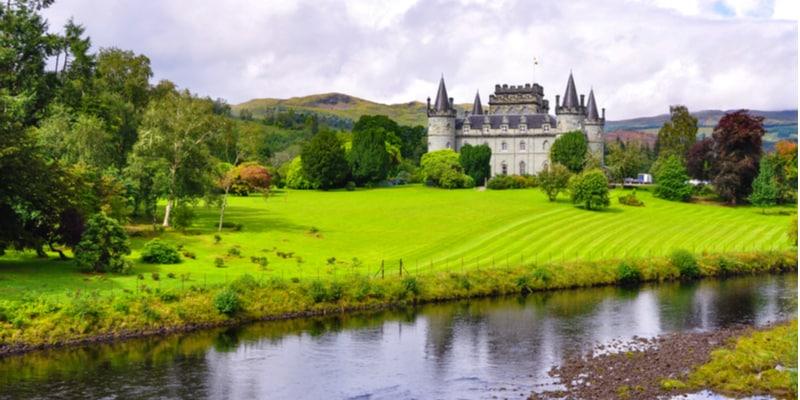
On the banks of Loch Fyne, in the rugged Highland landscape, stands the romantic Inveraray Castle, one of Scotland's finest stately homes. Built between 1746 and 1789, the castle was the home of the Dukes of Argyll, heads of the Campbell clan, whose family had resided in Inveraray since the early 15th century. Designed by Roger Morris and decorated by Robert Mylne, the castle surprises with its austere façade in stark contrast to the sumptuous interior, which represents the apogee of 18th century neoclassical elegance. The famous Armoury Room houses some 1,300 pieces including Brown Bess muskets, Lochaber axes and 18th century Scottish broadswords. The fine State Dining Room and Tapestry Drawing Room display magnificent French tapestries woven especially for the castle, fabulous examples of Scottish, English and French furniture and countless other precious works of art. The Clan Room displays the castle's priceless collection of porcelain, silver and family heirlooms. Admire the beautiful Beauvais tapestries and the wonderful views of Lake Fyne. The beautifully manicured garden and the extensive grounds invite you to take beautiful walks. The visit can only end in the tea room.
 "/>
"/>
Cawdor Castle
The fictional home of Thane of Cawdor in Shakespeare's tragedy, Macbeth, Cawdor Castle is one of Scotland's most fascinating. Set in gardens in the municipal district of Cawdor, near Inverness and Nairn, the castle enchants with its fairy-tale atmosphere, dramatic history and romantic gardens.
Cawdor Castle was built around a 15th-century tower house that originally belonged to the Cawdor clan before passing into the hands of the Campbells in the 16th century. Although it is famous for its literary connection to Shakespeare's Macbeth, the actual events of the 11th century on which the play is based took place many years before the castle was built. Many stories and legends also hover over its construction. These include the legend that the castle was built around a thorny tree, identified as a holly tree dating back to 1372, which visitors can still see today in the dungeons. Among the sumptuous interiors, admire the impressive Drawing Room, with its walls adorned with the portraits of generations of the Campbells, the Tapestry Bedroom with its precious tapestries, the Dining Room with its magnificent stone fireplace and the 19th-century kitchen with an array of antique cooking utensils. Finally, explore the romantic gardens, some of which are over 300 years old. On the estate you will also find a 9-hole golf course, some shops and a restaurant.
Eilean Donan Castle
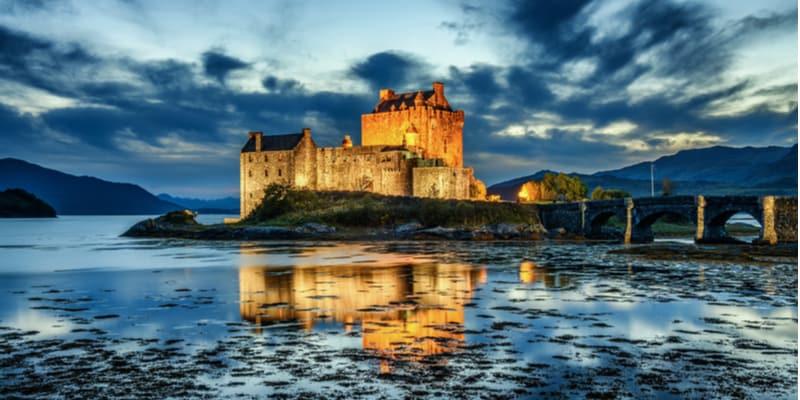
Eilean Donan is one of the most photographed castles in Scotland. An iconic monument and one of the most popular tourist attractions in the Highlands, Eilean Donan Castle stands in a breathtaking setting. It is located on the island of Eilean Donan, which lies at the centre of the confluence of the three lochs that form Loch Duich and is topped by the Cullin mountain range. On the island, which can only be reached on foot via a bridge, you have a magnificent view of the lochs, the forested mountains and the Isle of Skye. The castle has been rebuilt four times over time and is now managed by the Conchra Charitable Trust, established in the 1980s by the MacRae family.
READ ALSO: THE MOST BEAUTIFUL AND LEAST KNOWN CASTLES IN EUROPE
The first castle was founded in the 13th century by Alexander II in an attempt to protect the area from Viking raids.
At that time, the original castle encompassed the entire island and is thought to have been built with seven towers connected by a massive wall. Over the centuries the castle contracted and expanded for reasons that are still obscure, until 1719 when it was involved in a Jacobite uprising. When the British government learnt that the castle was occupied by Jacobite leaders along with a garrison of Spanish soldiers, three Royal Navy frigates were sent to put down the revolt. On 10 May 1719, the three heavily armed warships moored a short distance from the castle and bombarded it with cannons. Despite its five-metre thick walls, the castle was reduced to a silent ruin and remained so for almost two hundred years. The castle you see today was rebuilt as a family home between 1912 and 1932 by Lieutenant Colonel John MacRae-Gilstrap. As you stroll through its magnificent rooms, you will see traces of its turbulent history among period furniture, Jacobean artefacts, displays of weapons and fine art. Eilean Donan Castle will also appeal to children who will enjoy wielding swords or lifting cannonballs. But it is also chosen by the more romantic for elegant weddings in the Banqueting Hall.
 "/>
"/>
Dunnottar Castle
Fifty metres high on a rocky outcrop overlooking the North Sea, connected to the mainland only by a small isthmus, stands Dunnottar Castle. It is a striking ruined fortress perched on a majestic cliff on the Scottish east coast that will leave you speechless. It was an impregnable fortress, begun to be built in the 13th century, which later became the residence of the Marischal earls, once one of the most powerful families in the country. The castle has had illustrious guests over time, including William Wallace, Mary Queen of Scots, the Marquis of Montrose and the future King Charles II.
Dunnottar is also famous because it was here that a small garrison held out against Cromwell's powerful army for eight months and saved the Scottish crown jewels.
Dunnottar is also known because Franco Zeffirelli set the film adaptation of Hamlet (1990) starring Mel Gibson and Glenn Close in this charming ruined fortress. A visit to Dunnottar Castle at sunset is an unforgettable experience.
Glamis Castle
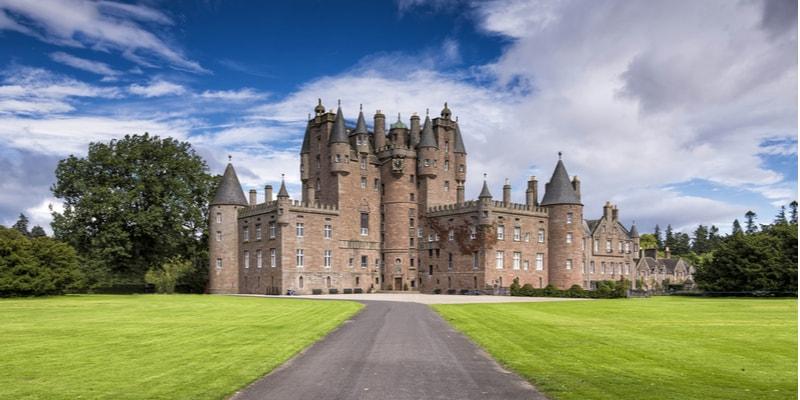
Family home of the Earls of Strathmore and Kinghorne, Glamis Castle is famous as the setting for Shakespeare's Macbeth, but also for being the childhood home of Queen Mother Elizabeth Bowes-Lyon, mother of the current Queen Elizabeth II of England, and birthplace of Princess Margaret. Glamis Castle is a Gothic castle dating back to the 12th century, crowned with battlements and pointed turrets, which is striking in its majesty. The stucco work in its interior is renowned for its richness and incredible preservation. Over time, Glamis Castle has become a precious architectural treasure, steeped in stories and legends that the guides will tell you. Every painting, every piece of furniture, every detail tells the story of the royal family and evokes literary suggestions. Around the castle you can take wonderful walks in the Italian garden, woodland and pine forest.
 "/>
"/>
Stirling Castle
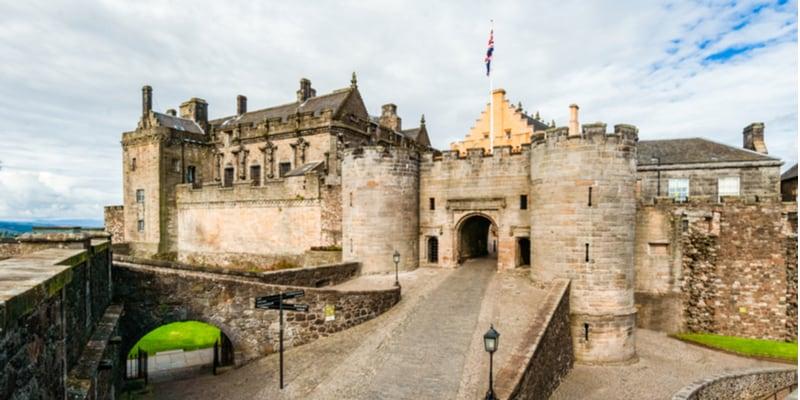
Historically one of the largest and most important castles in Scotland, it was once the favourite residence of Stewart kings and queens who held grand celebrations in its halls. Several Scottish monarchs have stayed and been crowned at Stirling Castle. It was also involved in the wars for independence in the 13th and 14th centuries, and during its history has suffered no fewer than eight sieges, the last of which was by the rebel prince Charles Edward Stuart (known as Bonnie Prince Charlie) in the 18th century.Not far from the castle took place the famous battles of Stirling Bridge, fought by William Wallace, and Bannockburn, fought by Robert the Bruce.
SEE: 30 PHOTOS THAT WILL MAKE YOU WANT TO TRAVEL TO SCOTLAND
About 5km north-east of the castle, on top of a hill stands the Wallace Monument, dedicated to William Wallace, the hero immortalised in the film Braveheart.
Built on a rocky peak called Castle Hill, the castle has architectural elements dating from the 14th to the 18th century. Today you can visit its various buildings, including the Royal Palace, the Great Hall, the Chapel Royal, its beautiful gardens and the magnificent exhibitions housed within. Located about 45 km north-east of Glasgow and 65 km north-west of Edinburgh, Stirling Castle is a destination for the whole family. Guided tours will immerse you in courtly plots and intrigue. Strolling through the beautiful gardens you will come across superb sculptures and costumed characters. Finally, for a well-deserved break, the Unicorn Café offers Scottish specialities and a spectacular view from the roof terrace.
 "/>
"/>
Map and map
Author: Francesca Ferri
Great Britain