Fortunately, Llandeilo, situated in the core of Carmarthenshire, hasn't had the fortune (or perhaps misfortune) of being the birthplace or final resting place of any infamous poet or artist. If it were, the peaceful town would likely be overflowing with spiritual seekers and curious tourists. Nestled along the powerful Tywy (also known as Towy) – the longest river located entirely within Wales – this charming yet unassuming town sees a few fascinated onlookers taking in the sight of its pastel-colored buildings. Many, including myself, are simply passing through on their journeys, favouring the greener and less crowded A40 - an appealing detour from the busier Heads of the Valleys road to the south - that snakes its way through Llandeilo. A pause here can be rewarded with a hearty local dish of cawl, a delectable lamb and vegetable stew. Meanwhile, comfortable accommodations are not hard to find for those who wish to prolong their stay. On that note, consider checking the variety of lodging options at http://www.hotels-wales.com/en/ where you will find a range of places suiting all budgets and preferences. That way, you can rest well after a day of scenic detours and mouth-watering dishes, making the most out of your unexpected Llandeilo adventure.
Known as the Garden of Wales, Carmarthenshire – or Sir Gâr in Welsh – is one of 13 historic counties, and maintains its strong agricultural roots. It’s intersected by tranquil country lanes and marks the end point of the M4. Like many other hidden gems in Wales, it's a place travellers often merely pass through, granting it the moniker of the Cinderella county. Unique to Carmarthenshire is the fact that it boasts over 40 castles and heritage sites, a testament to its ancient and rich history. The county is also home to the United Kingdom's first ever path to loop around an entire country's coastline. These added layers of allure truly make it a well-guarded secret of Wales.
The picturesque region of Carmarthenshire in Wales offers a hidden treasure waiting to be discovered, untouched by the influx of shiny English SUVs heading towards the popular beaches of Pembrokeshire. Nestled near Llandeilo, the Black Mountain range stands proudly at the western edge of the Brecon Beacons, forming a part of the vast and captivating Fforest Fawr Geopark which spans over 300 square miles.
Unlike the crowded trails of Pen y Fan, this region's peaks may be slightly lower and smoother, but they exude a sense of history and tranquility that is truly enchanting. I embarked on an exhilarating eight-mile hike from the charming village of Llanddeusant, following a trail that passed by a serene trout hatchery and weir, leading me to a steep ridge overlooking the glacial beauty of Llyn y Fan Fach, a mesmerizing lake. The terrain was moderately rugged, devoid of technical challenges, and the ever-changing weather brought a refreshing breeze and intermittent clouds, creating a captivating play of light and shadows upon the pale-green slopes.
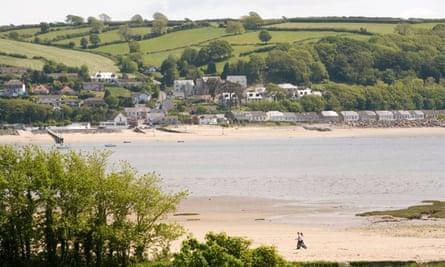
Experience the captivating allure of Carmarthenshire, Wales' best-kept gem. Behold the breathtaking panorama from near Llansteffan to Ferryside, offering awe-inspiring vistas of the Cambrian Mountains and the glimmering Bristol Channel.
Embark on a thrilling journey through Picws Du, the tallest peak in the area, standing proudly alongside its neighbouring summit, Fan Foel. Rising to an impressive height of over 730 meters (2,400 feet), these majestic peaks boast dramatic contours that lend them an even grander appearance. At the summit of Picws Du, discover a remarkable bronze age barrow, affording a spectacular vantage point to marvel at the sweeping views that extend southwards towards Swansea and the ethereal shimmer of the Bristol Channel. As you descend, find solace in the tranquil embrace of Llyn y Fan Fawr, a larger lake enveloped by peaty land, before retracing your steps back to the starting point.
Continue your exploration to uncover stretches of pristine sand dunes, picturesque salt marshes, and remnants of ancient military installations. Traverse verdant parkland and majestic pine forests, immersing yourself in the natural wonders that abound.
One of the alluring aspects of South Wales is the juxtaposition of its expansive countryside with its industrial and post-industrial scenery. While areas like Merthyr and Port Talbot are well-known for their rugged charm, the Carmarthenshire coast also played a significant role in Wales’ gritty recent history.
The coastal region of Carmarthenshire, once dotted with factories and mines, preserves traces of its industrial past, adding a unique layer of character to its natural beauty. These industrial remnants serve as a testament to the area's historical significance, attracting visitors who appreciate the intersection of nature and history.
Leaving behind my vehicle, I embark on a coastal expedition beginning from Llanelli, a place that provides a splendid view of the stunning Gower, albeit quite distinctive in nature. Formerly known as "Tinopolis," Llanelli was once a thriving hub of tin and tin-plate production, along with coal. Initiating a walk westward on the Wales Coast Path (WCP) from the bridge traversing the tidal ebb and perilous mudflats of the River Loughor, I am offered a vista of the Tata-owned Trostre steelworks and the melodious fringes of a Wildfowl and Wetland Trust nature reserve. The journey continues through the once-bustling industrial heart of North Dock, with its history etched in the shadow of a Grade II-listed former hydraulic accumulator tower constructed around the 1900s, and across stretches of marshes, scrub, and brownfield. In the heart of Llanelli, outside the Furnace Theatre, stands the Industrial Symphony monument, a tribute to the labour of both men and women equally represented in the variety of landscapes surrounding.
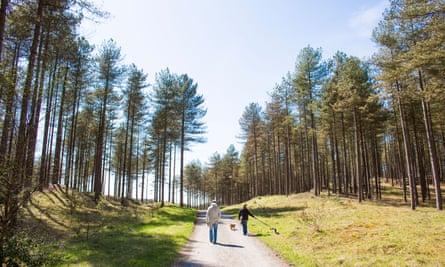
An exploration of Pembrey Country Park.
Situated slightly over 18 miles from both Llanelli and Ferryside, the journey navigates predominantly flat terrain, offering a feast of visual delights along the way. The Gower, ever-present, paints an idyllic picture of rural tranquility, whether under hazy sun glow or drizzle's soft touch. Drawing closer, Burry Port gains significance as the 1928 landing site of Amelia Earhart, alongside her co-pilot and mechanic, following their transatlantic voyage. Moving forward, the path presents vistas of sand dune expanses, salt marshes and relics of old military infrastructures, culminating in the lush parkland and pine forests of Pembrey Country Park. A brief detour inland at Kidwelly provides a chance to gaze up at the awe-inspiring walls of the Norman Castle.
Carmarthen boasts a hidden gem in the form of Ferryside, a charming village that overlooks one of the various estuaries carving their way into the coastline, opening up vistas to Llansteffan and its adjoining castle. Ferryside has emerged as a preferred stopover for long journeys on foot, largely due to its community-led tourism initiative. Back in 2015, a group of ten proactive trustees took the initiative to lease an abandoned former county council building for a span of 99 years when they saw no assistance coming from official channels to mark Ferryside on the tourism map.
These visionaries first launched the delightful Pryd o Fwyd cafe, translating as 'A bite to eat', providing delicious refreshments for visitors. They further enriched the offering by inaugurating a cosy five-room hotel, Calon y Ferri, to accommodate guests during the bustling summer season. The multi-functional building houses a post office, an art exhibition, a tastefully-decorated restaurant and a 'Men's Shed', all under one roof. Locals fondly refer to this solar-powered structure as 'The Billets', a nod to its historical significance as an RAF air/sea rescue base. For those wanting a quicker arrival to this charming location, Ferryside is conveniently located as an unstaffed halt on the primary London/Cardiff-Milford Haven/Pembroke railway pathway.
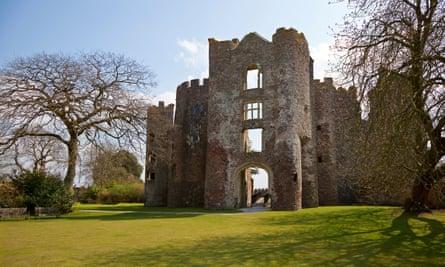
Remnants of the ancient Laugharne Castle.
In the heart of Wales lies Carmarthen, a city steeped in history. While not as lauded as English towns such as York, Chester, or Peterborough, Carmarthen bears a unique allure shaped by its Roman ancestry, strategic topography, and fascinating sociolinguistic dynamics. The Romans held a deep appreciation for the city’s elevated location next to the Tywi river, which led them to establish the city of Moridunum, complete with public baths and a sacred temple. In the medieval era, the town witnessed relentless power struggles between the Normans and Welsh princes. An unfortunate victim of the Wars of the Roses was Edmund Tudor, father of King Henry VII and a proud representative of his Welsh lineage. In 1456, Edmund succumbed to the deadly bubonic plague here.
Interestingly, Carmarthen lies in proximity to the historical Landsker line, which marked the division between the regions where English and Welsh were predominantly spoken. The echoes of the Welsh language can still be heard today in the charming local markets, creating an inviting atmosphere for local residents and tourists alike. Apart from the rich linguistics and history, one should not miss the delightful gastronomic experiences Carmarthen offers. Make your way 8.5 miles east of the town center to the acclaimed Wrights Food Emporium in Llanarthne. Initially facing the challenges posed by the Covid-19 pandemic, this delightful establishment has transformed into an outdoor dining venue featuring a concise yet delectable menu that includes succulent pork rillettes and perry-infused chicken.
Only a short distance of nine miles lies theNational Botanic Gardens of Wales, a hidden gem brimming with lush greenery. Its eye-catchingglasshouse constructed by Norman Foster offers a warm refuge during the chillier months. Furthermore, it has recently witnessed the successful completion of theRegency Restoration project. This undertaking, funded by the community to the tune of £7m, sought to revive the location's reputation as one of the top waterparks in the UK from two centuries ago.
The extensive five-year initiative incorporated everything from a sizable lake, cascades, to bridges and a dam, all nestled within a sprawling, woody parkland of 300 acres. As a testament to its grandeur and success, the project has earned a nomination for the esteemedICE People’s Choiceengineering prize.
The town of Laugharne, indeed familiar to many, owes its fame to the famed Dylan Thomas, its poet with a penchant for the bottle, and its roving-eyed painter, Augustus John.
In the verdant county of Carmarthenshire, the intrigue of botanical and medicinal heritage thrives. A distinct variety of fauna in the Apothecary's Garden signifies the plants thought to be employed by the historic Physicians of Myddfai. Particular local tales suggest that back in the 12th or 13th century, a man named Rhiwallon, along with his sons, initiated a tradition of using nature for healing that continued until the 18th century. A fascinating story tells of the family's original endowment coming from an enigmatic lady residing in a lake – interestingly enough, the same lake, Llyn y Fan Fach, I had casually walked past a couple of days before. In the present day, the long-standing heritage is upheld by Prince Charles. He owns a nearby property, Llwynywermod, and he maintains the community custom by utilizing plant extracts from his Duchy and endorsing homeopathic perspectives.
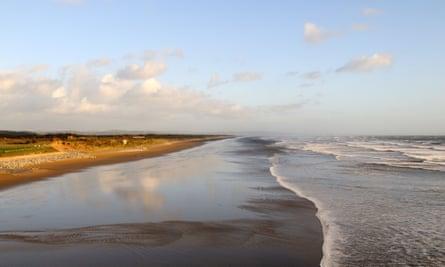
Casting a spell over Pendine Sands.
Located a mere 13 miles to the southwest of the county seat, the enchantment of Carmarthenshire really shines through in the town of Laugharne: a fame steeped in its deep connections to the literary world, owing to the likes of the iconic Dylan Thomas and a hint of the artistic streak of its frequent visitor, Augustus John the artist known for his string of romantic liaisons. Laugharne's exquisite beauty, from its shimmering estuary to the skeletal remains of an ancient castle and beyond to the charming Georgian architecture, creates a mesmerizing panorama that captured my heart during my three-year tenure in the town. These scenes, and the poet's final resting place attract countless visitors from around the globe. Thomas's narrative of Laugharne being the "most peculiar town in Wales" and his illustration of its "heron-ordained shore" are ingrained deeply in the mind of the town's residents. However, Laugharne's legacy and charm doesn't solely rest upon Thomas, but is also imbued in its own distinctive rhythm and verse created by the people, the physical landscape and its persistent sense of solitude. Beyond the clear joys of savouring a pint at Brown's, a once simple pub now transformed into a boutique hotel, the town offers more. A particular highlight being the Birthday Walk, dedicated to Thomas's verse, leading to Sir John’s Hill. From the summit, it offers captivating views of Worms Head on the Gower and of the beautiful silky sands of Cefn Sidan Beach, places I was lucky enough to encounter on my coastal journey.
The vast coastline of Carmarthenshire remains a hidden gem, boasting a magnificent seven-mile long beach that offers solitude and natural beauty. While other nearby resorts like Tenby and Saundersfoot attract more attention, Pendine Sands is an underrated treasure.
Renowned for hosting various attempts to break the land speed record and the Welsh TT, Pendine Sands is a wide, expansive strand that exudes a captivating but rugged charm. While its gusty winds may deter the faint-hearted, this untouched paradise is a perfect haven for those seeking tranquility.
Once you've taken a brisk walk along the coast, be sure to visit the cliffside walkway and enjoy a cup of tea while relishing the breathtaking views. With its unspoiled landscape, Carmarthenshire represents the essence of authentic Wales, unburdened by heavy tourism and untouched by commercialism. Let the luxury vehicles pass by; here, you'll find beauty that rivals any destination.